Overview
Teeth naturally darken over time from coffee, tea, red wine, tobacco, certain medications, and ageing. Whitening does not damage or weaken enamel when it's done under professional supervision — it works by breaking down the pigment molecules trapped in and on the tooth surface.
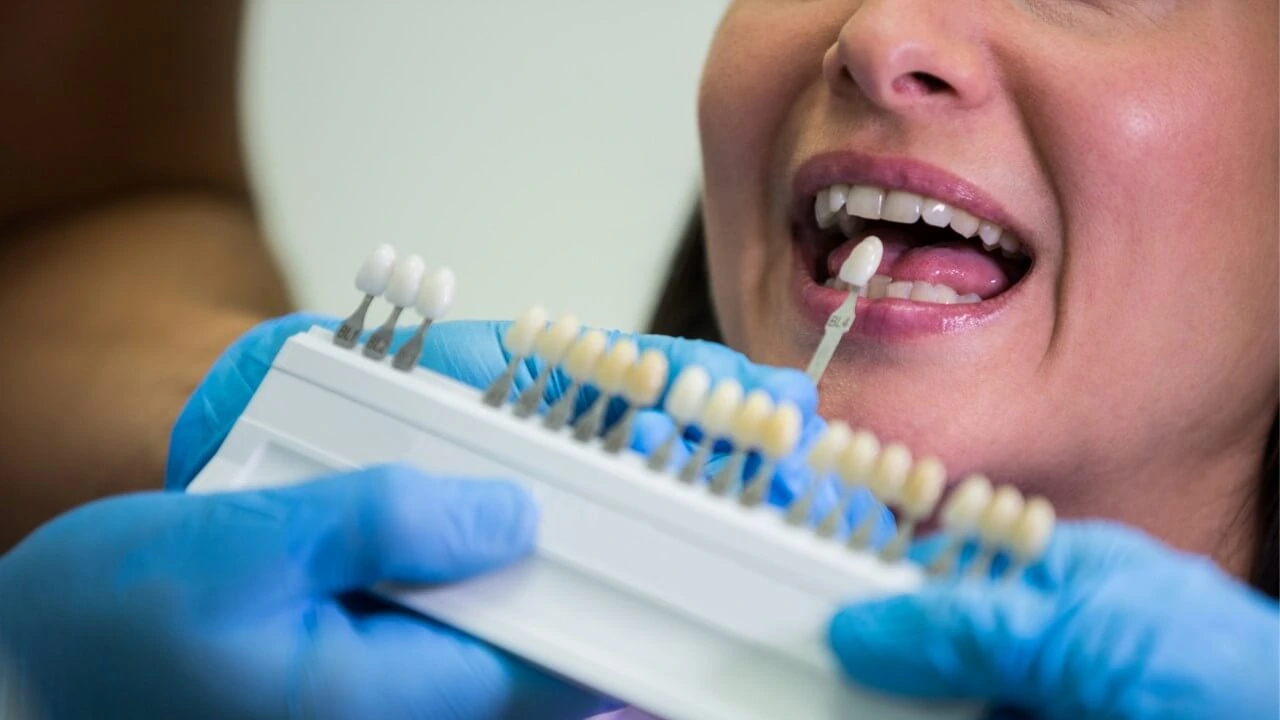
Before any whitening starts, we check for cavities, gum disease, and existing restorations (crowns, veneer, or fillings), since these do not lighten and can end up a different shade from your natural teeth if whitening isn't planned around them. We also record your baseline shade so you have a clear, measurable before-and-after.
After treatment, we go through simple aftercare — what to avoid in the first 48 hours, how to manage temporary sensitivity, and how to keep your results looking fresh for longer.
Whitening options we offer
Not every patient needs the same approach. We'll recommend one of the following based on your stain type, timeline, and sensitivity history.
| Option | Best for | Duration | How it works |
|---|---|---|---|
| In-office (chairside) whitening | Fastest visible results; events, deadlines | About 60–90 minutes, single visit | Higher-concentration professional gel applied under supervision, with gums protected throughout |
| Take-home custom trays | Gradual whitening, lower sensitivity, top-up flexibility | Worn daily or nightly over 1–2 weeks | Dentist-fitted trays with a professional-strength gel you apply at home, checked in for progress |
| Combination treatment | Deeper staining, or wanting fast results with an easy top-up plan | In-office session plus a short take-home course | Chairside session for the initial lift, trays provided to maintain and extend the result |
Who is it for?
- Whitening tends to work well for yellowish or surface-stained teeth from coffee, tea, red wine, or smoking, and for teeth that have gradually darkened with age.
- It also suits patients who want a brighter smile before a wedding, event, or milestone.
- It may not be the best fit for grey or brown intrinsic staining (from tetracycline or fluorosis), where veneer or bonding usually give more predictable results; for crowns, veneer, or bonded fillings on visible teeth, which won't change colour; or where there are active cavities, gum disease, or untreated sensitivity, which we treat first.
- Pregnant or breastfeeding patients are usually advised to defer whitening as a precaution.
- This isn’t a self-diagnosis checklist — we assess your teeth and gums in person and explain what result is realistic for your case before recommending treatment.
What to expect
- 01Assessment & shade recording — we check your teeth, gums, and existing restorations, discuss your goals, and record your starting shade with a shade guide.
- 02Treatment planning — we walk through suitable options, expected outcome, timing, and cost so you can decide with full information, including whether whitening alone is enough or another option (like veneer) would serve you better.
- 03Whitening session(s) — gums are protected, whitening gel is applied per the agreed plan, and we monitor comfort throughout, whether that's a single chairside visit or a take-home course with check-ins.
- 04Shade check & aftercare — we compare your new shade against the baseline and go through aftercare: a short staining-food window, sensitivity management, and how to maintain your result.
Benefits
- Non-invasive — no enamel is removed or reshaped; whitening only changes tooth colour.
- Measurable results — shade is recorded before and after, so you can see the actual change rather than a subjective impression.
- Sensitivity managed — gel concentration and wear time are adjusted for patients prone to sensitivity.
- Planned around your whole mouth — we flag crowns, veneer, or fillings that won't whiten, so there are no surprises after treatment.
Is teeth whitening safe?
Professional teeth whitening is safe when it's assessed and supervised by a dentist. The most common side effect is temporary tooth or gum sensitivity, which usually settles within a day or two of finishing treatment.
We reduce this risk by checking for exposed dentine or existing sensitivity beforehand, protecting the gums during in-office treatment, and adjusting gel strength or wear time for take-home trays. Over-the-counter kits used without an assessment carry a higher risk of uneven results and gum irritation, since they aren’t matched to your specific teeth.
Aftercare & maintaining your results
- Avoid strongly pigmented food and drink (coffee, tea, red wine, curry, soy sauce) for about 48 hours after treatment, when teeth are most porous.
- Use a sensitivity toothpaste for a few days if needed — we'll advise if this applies to you.
- Whitening is not permanent. Touch-up trays and good oral hygiene habits are the main ways to slow how quickly your shade fades.
- Routine scaling and polishing between whitening sessions helps remove surface stain buildup and keeps results looking fresher for longer.
Teeth whitening vs. veneer vs. smile makeover
Not sure whitening is the right fit? Here's how it compares to our other cosmetic options.
| Service | Addresses | Invasiveness |
|---|---|---|
| Teeth Whitening | Surface stains, yellowing, mild discolouration | Non-invasive |
| Veneer | Discolouration that won't respond to whitening, chips, gaps, shape | Minimal enamel reshaping |
| Smile Makeover | Combined concerns — colour, shape, alignment | Varies by combined treatments |
Frequently asked questions
How many shades whiter will my teeth get?
Most patients see an improvement of around 3 to 8 shades, depending on the type and depth of staining, the treatment option chosen, and your natural tooth colour. We'll give you a realistic estimate after assessing your teeth.
How long do teeth whitening results last?
Results typically last from 6 months to 2 years. Diet, smoking, and oral hygiene habits affect how quickly your shade fades. Occasional touch-up trays can extend your results.
Does teeth whitening hurt?
Whitening itself isn't painful, but temporary sensitivity to hot, cold, or air is common during and shortly after treatment. This is usually mild and settles within a day or two; we adjust the treatment plan for patients who are more sensitivity-prone.
What's the difference between in-office and take-home whitening?
In-office whitening uses a stronger gel applied by the dentist for faster results in a single visit. Take-home whitening uses custom trays and a professional-strength gel you apply yourself over 1 to 2 weeks, giving a more gradual result with lower sensitivity. Many patients combine both.
Will whitening work on crowns, veneer, or fillings?
No. Whitening only changes the colour of natural tooth enamel — crowns, veneer, and tooth-coloured fillings won't lighten. If you have visible restorations, we'll plan your treatment so your smile stays even, and discuss replacement options if a mismatch would be noticeable.
Is teeth whitening safe for sensitive teeth?
It can be, with the right plan. We assess your sensitivity beforehand and adjust gel concentration, wear time, or recommend a desensitising toothpaste so treatment stays comfortable.
How much does teeth whitening cost in Malaysia?
Cost depends on the option chosen (in-office, take-home, or combination) and your treatment plan. We'll give you a clear quote after your assessment — contact your nearest Tooth Buddy clinic for current pricing.
Can I whiten my teeth if I'm pregnant?
Most dentists recommend postponing elective teeth whitening during pregnancy or breastfeeding as a precaution, since there isn't enough research to confirm it's risk-free. We're happy to reassess once you're ready.