
Overview
Wisdom teeth are the last molars to come through, usually in the late teens or twenties. Because they arrive when the jaw has little room left, they often become impacted — stuck against the tooth in front, or only partly erupting through the gum. When that happens they can cause pain, repeated gum infections, decay in the wisdom tooth or its neighbour, and swelling.
Not every wisdom tooth needs to come out. If yours are healthy, fully erupted, and easy to clean, we may simply monitor them. We recommend removal when a tooth is causing symptoms or is likely to — for example a partly erupted tooth trapping food and bacteria, or an impacted tooth damaging the molar next to it. We take an X-ray (and a 3D scan for more complex cases) to see the tooth’s position and roots before advising.
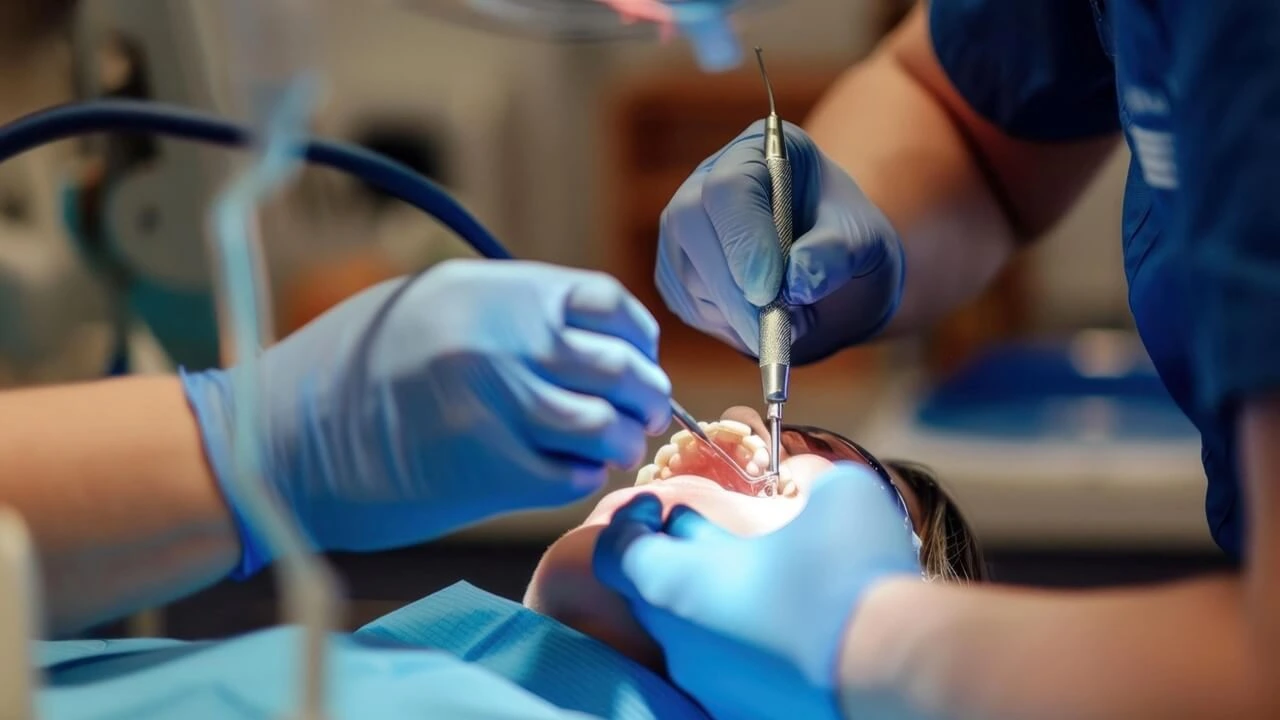
Removal is done under local anaesthesia to keep you comfortable. A straightforward tooth may be a simple extraction; an impacted one may need a minor surgical procedure to remove it in sections. Either way, we explain what’s involved, what recovery looks like, and how to look after the area so it heals well.
Who is it for?
- Removal is usually recommended for wisdom teeth causing pain, swelling, or repeated gum infections (pericoronitis) around a partly erupted tooth.
- It’s also advised when a wisdom tooth is decayed and hard to restore, is pushing against or damaging the neighbouring molar, or is trapping food and bacteria because it can’t be cleaned properly.
- Healthy, fully erupted wisdom teeth that you can clean well often don’t need removing — we’re happy to monitor them rather than intervene unnecessarily.
- Timing matters: younger patients often heal faster and have simpler extractions, so if a wisdom tooth is likely to cause problems, addressing it earlier can be easier than waiting.
- This isn’t a self-diagnosis checklist — we examine the tooth and take imaging to see its position and roots before recommending removal or monitoring.
What to expect
- 01Assessment & imaging — we examine the tooth and gums and take an X-ray (or a 3D CBCT scan for complex cases) to map the tooth’s position, roots, and nearby nerves.
- 02Planning & options — we explain whether it’s a simple or surgical extraction, the anaesthesia, the expected recovery, and any risks, so you can decide with full information.
- 03The procedure — the area is fully numbed with local anaesthesia. A simple tooth is gently removed; an impacted one may be removed in sections through a small opening in the gum, with stitches if needed.
- 04Immediate aftercare — we place gauze, confirm the bleeding is controlled, and give you clear written instructions plus pain relief guidance before you leave.
- 05Healing & review — most people recover within a few days to a week. We arrange a review or stitch removal if needed and are here if you have any concerns.
Benefits
- Relieves pain and infection — removing a problem wisdom tooth resolves the recurring pain, swelling, and gum infections it causes.
- Protects neighbouring teeth — taking out an impacted tooth prevents it decaying or damaging the healthy molar in front of it.
- Easier cleaning — removing a hard-to-reach tooth makes the area simpler to keep clean and healthy.
- Planned and comfortable — imaging and local anaesthesia make the procedure predictable and manageable, with clear recovery support.
Is wisdom tooth removal safe, and what’s recovery like?
Wisdom tooth removal is a common, safe procedure carried out under local anaesthesia. Careful imaging beforehand lets us see the roots and nearby nerves and plan the safest approach, which is why we assess with an X-ray or 3D scan rather than removing a tooth blind.
Some swelling, soreness, and stiffness for a few days afterwards is normal and expected, and settles with rest, cold compresses, and the pain relief we advise. We’ll explain how to protect the healing socket — avoiding vigorous rinsing, smoking, and drinking through a straw in the first days, which can dislodge the clot and cause a painful "dry socket." We also tell you the warning signs to watch for so you know when to contact us.
Aftercare & recovery
- Rest for the first day and use a cold compress on the cheek to reduce swelling.
- Stick to soft, lukewarm foods at first and chew on the opposite side; avoid very hot food and drinks while numb.
- Don’t rinse vigorously, smoke, or drink through a straw for the first few days — these can dislodge the blood clot and cause a painful dry socket.
- Keep the area clean with gentle salt-water rinses after the first 24 hours, and take pain relief as advised. Contact us if pain worsens after a few days, or if there’s heavy bleeding, spreading swelling, or fever.
Frequently asked questions
Do all wisdom teeth need to be removed?
No. Healthy wisdom teeth that are fully erupted and easy to clean can be left in place and monitored. Removal is recommended when a tooth is impacted, causing pain or infection, decayed, or damaging the neighbouring tooth. We assess yours with imaging before advising.
Does wisdom tooth removal hurt?
The procedure is done under local anaesthesia, so the area is fully numb and you shouldn’t feel pain during it — mostly pressure. Afterwards, some soreness and swelling for a few days is normal and managed with the pain relief and aftercare we provide.
How long does recovery take?
Most people feel much better within a few days and largely recover within about a week, though a surgical extraction of an impacted tooth can take a little longer. Following the aftercare instructions — rest, soft foods, and protecting the socket — helps you heal smoothly.
What is a dry socket and how do I avoid it?
A dry socket happens when the blood clot protecting the healing socket is dislodged, exposing the bone and causing throbbing pain a few days after removal. You can lower the risk by not smoking, not drinking through a straw, and not rinsing vigorously in the first few days. Contact us if you develop increasing pain — it’s treatable.
What’s the difference between a simple and a surgical extraction?
A simple extraction removes a tooth that has erupted normally. A surgical extraction is needed for an impacted or partly erupted tooth and involves a small opening in the gum, sometimes removing the tooth in sections, with stitches. Imaging tells us in advance which your case needs.
Is it better to remove wisdom teeth when younger?
Often, yes, if a tooth is likely to cause problems. Younger patients tend to have less developed roots and heal faster, which can make extraction simpler. That said, we only recommend removal when it’s warranted, not routinely — the decision is based on your specific teeth.
How much does wisdom tooth removal cost in Malaysia?
Cost depends on whether it’s a simple or surgical extraction and how impacted the tooth is. We give you a clear quote after assessing the tooth and reviewing your X-ray — contact your nearest Tooth Buddy clinic for current pricing.